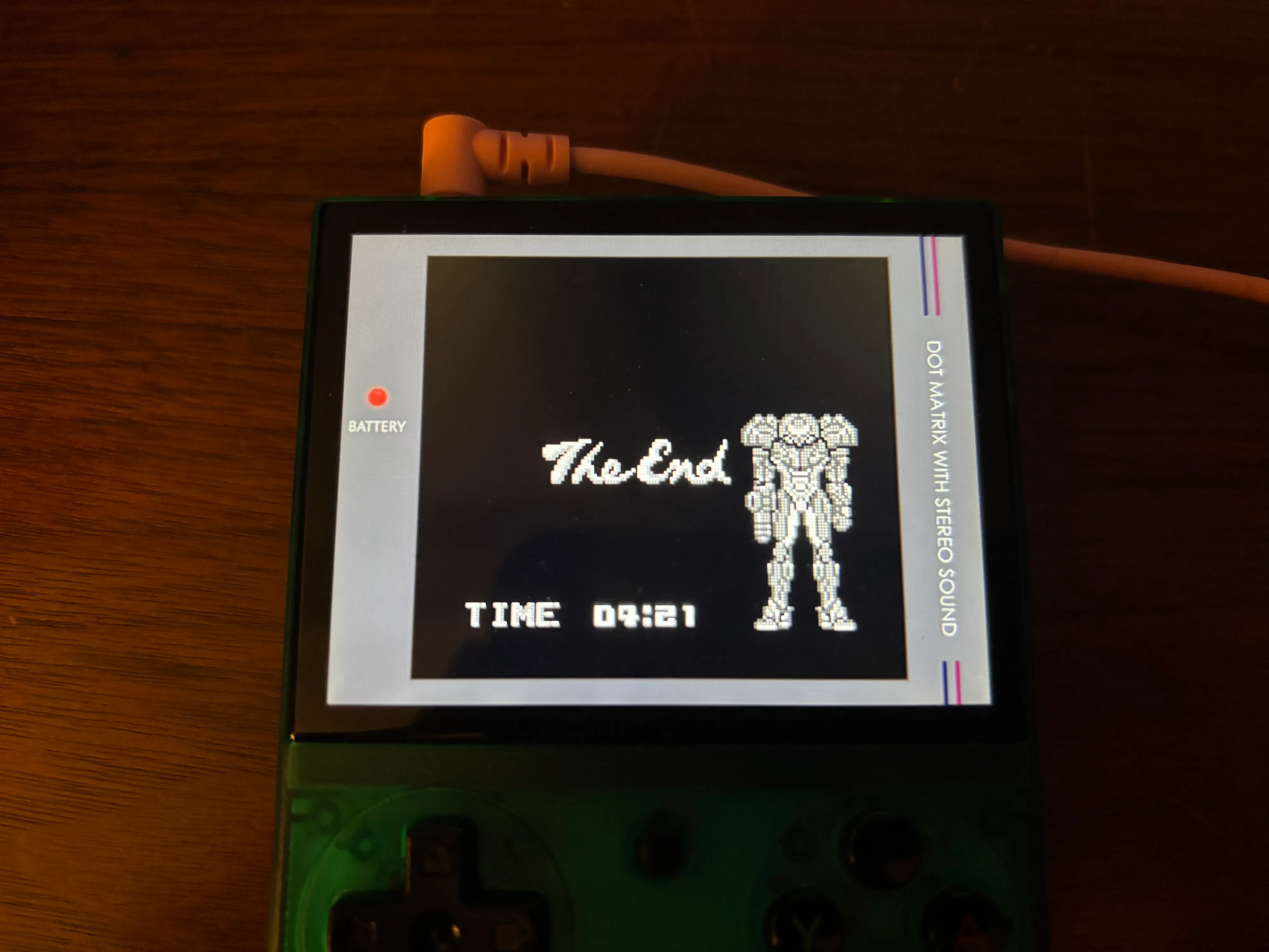
Metroid II has aged so much better than I was led to believe

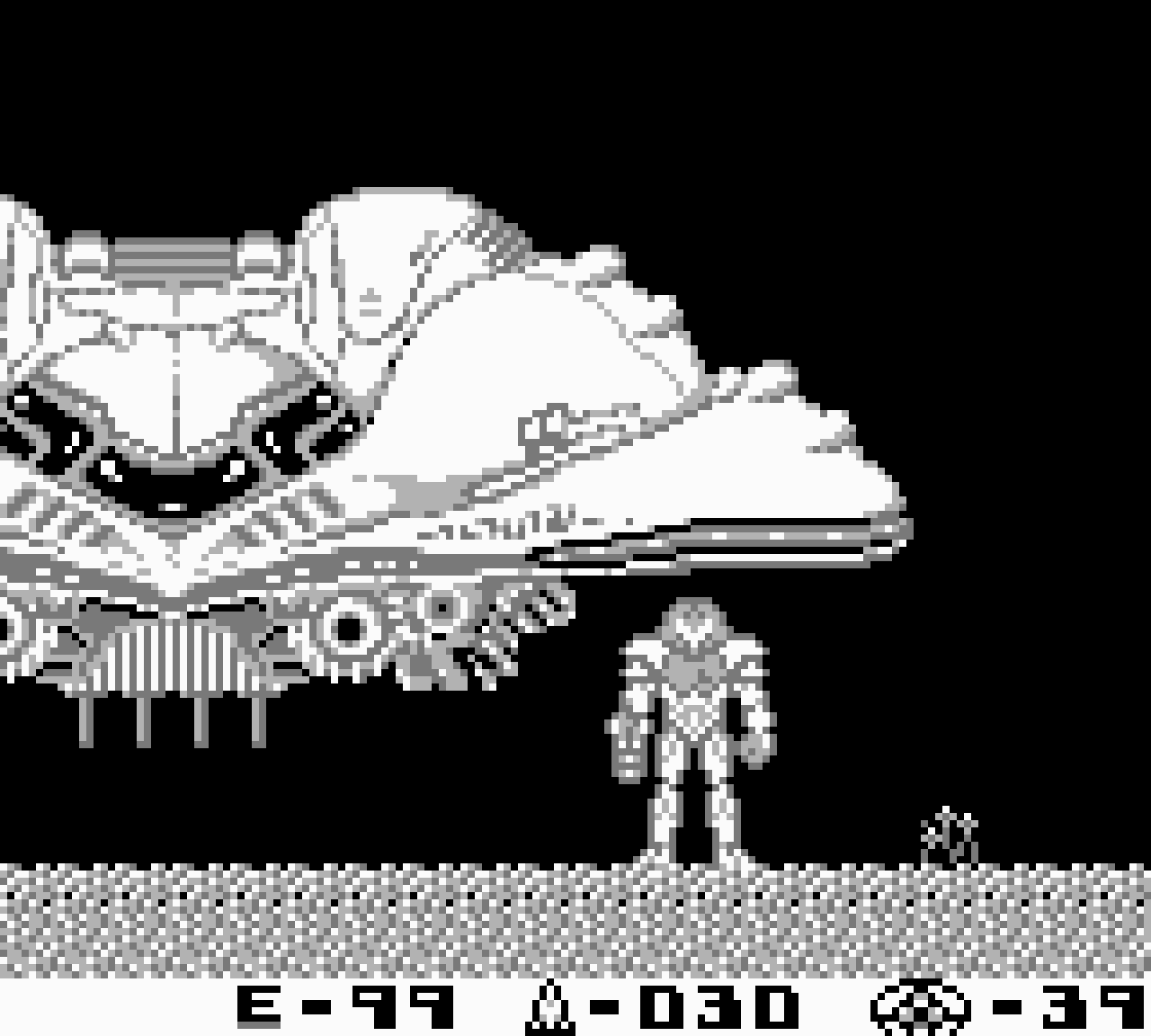
This post is mirrored from my review on Backloggd.
I came away from NES Metroid thinking that it was a frustrating but interesting experience. I came away from Metroid II: Return of Samus thinking it's fucking awesome, and that I'm shocked by how gracefully it's aged. Everyone who has ever told me this game was too old and clunky and desperately needed a remake to make it playable by modern standards is wrong. So, so wrong.
Right off the bat, despite being on more primitive hardware, Metroid II makes some big changes that make it more approachable. You can now save your progress, you no longer start at 30 health, there are spots on the map where you can refill your health and missiles for free, and perhaps most significantly Samus can now crouch and shoot, as well as shoot downwards in midair (which the game is eager to teach you with an opening section that makes you shoot blocks below you to progress). Yeah, it doesn't feel as smooth to control as Fusion, Zero Mission, or Dread, but play this after the NES game and the difference is night and day.
There's still no in-game map, but I never really found the need for one, or even the need to make my own, even though rooms can now get pretty damn massive and scroll on both axes. Metroid II cleverly adapts itself for the handheld format by giving you a limited amount of space to worry about at any given time. You have to clear out the Metroids in one area before an earthquake signals that the lava/acid/whatever has lowered and you can move on to the next. There's rarely any reason to go back to a previous area unless you realize you missed something, and there are a lot of upgrades you can get through the game without. It's a far cry from the traditional Metroidvania structure that makes you return to old areas with new abilities to find more stuff, but I can't ding it for not playing like Super Metroid when Super Metroid didn't exist yet.
Speaking of upgrades, there are a few really fun new ones in here, particularly the Spider Ball that lets you roll along walls and ceilings. It's very satisfying that you can jump off of one wall towards another wall and hit down again to reactivate Spider Ball and cling to it. Picking up a new beam still replaces your old one like in the first game, but after cycling through the four main types of beam along the way there's an area late in the game that straight up just gives you all four again and lets you pick which one you want to use for the last areas. And then there's another Ice Beam pickup right before it becomes necessary for the home stretch.
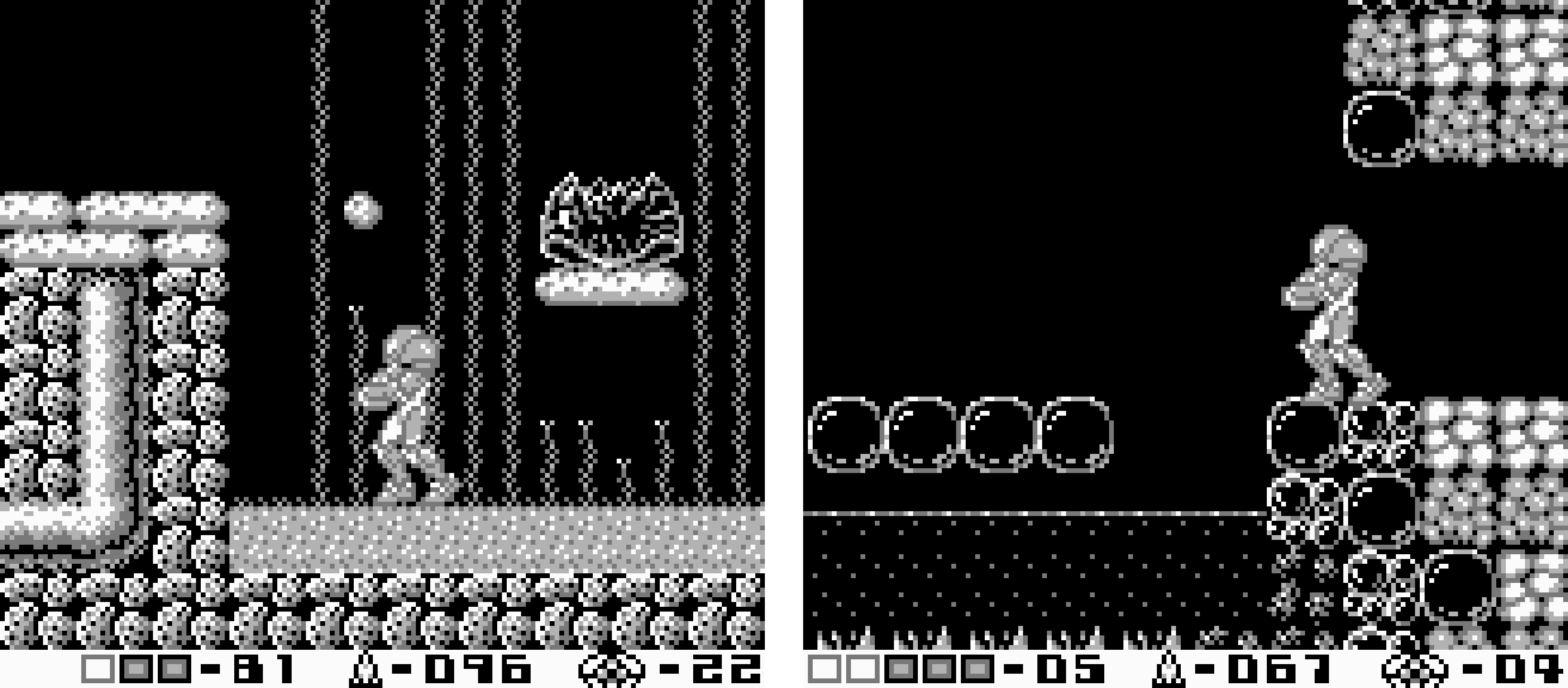
While the gameplay is much more approachable than the first, its atmosphere is even more tense and eerie and alien, which I think is what elevates it to true greatness. This is what everyone who likes this game always compliments, and for damn good reason. It's Samus's gradual descent further and further into the bowels of Hell as she completes her grim task of exterminating the Metroids. You will never see sunlight in this game, and from the moment you leave the ship you won't see the stars again until you return to the surface at the very end. You will never encounter another remotely humanoid life form, not even a Space Pirate. The black and white visuals give your surroundings this wonderful, surreal vagueness, these nonspecific rocky and organic and mechanical shapes sticking out from the constant darkness where your mind fills in the blanks. This would be shattered if I could tell what things were actually supposed to be thanks to more detail or color. And there are a few traditional music tracks, but many areas leave you with nothing but odd 8-bit ambiance and the echoing sound of Samus's jumping and shooting, or the intense warning siren when you're at low health. At times it feels more like a precursor to the survival horror genre than a regular action-adventure game.
This atmosphere is why the cramped screen real estate never bothered me. It's supposed to be a scary game, and having to grope around in the dark because you can't see what threats might be just a few tiles away makes it scarier. Playing on a smaller screen really helps, I think. It felt awkward to play this on a docked Switch, but playing it on an Anbernic handheld that made the display about the same size as on Game Boy made it feel very natural.
There's a level of cohesion to the world that's incredibly impressive for the hardware and helps immerse you in the space. Upgrades and more traditional "puzzles" are typically found in these underground Chozo ruins. They feel a bit like munitions depots with how many missile tank storage rooms you'll find, and the enemies are all machines left to guard the place. These rectangular buildings are surrounded by big caverns with more natural, uneven shaping, with winding rocky passageways connecting the major areas. The more natural areas also completely lack the traditional doors you have to shoot to open, further differentiating them from the Chozo ruins that hide upgrades behind missile doors. The natural areas get more and more alien as you get deeper into the world, and eventually you'll reach a final area that I can only interpret as the lab where the Chozo created the Metroids in the first place.
But, of course, the best environmental storytelling comes with the Metroids themselves. The placement of discarded Metroid husks so that you know one must be nearby, until the game eventually trips you up and has you run into a Metroid in the room BEFORE its husk. All the different ways they find to surprise you with Metroid ambushes. The dread when you encounter the next stage of Metroid evolution for the first time. The fear of running out of missiles, since they're the only thing that can kill Metroids. The way the last areas have fewer and fewer non-Metroid enemies until the final area has none whatsoever, as if the Metroids have killed everything else. Perhaps my favorite touch of all, the way the Metroid counter ticks down over the course of the game, and then when you get to the last area and see the egg on the other side of a wall, the counter starts ticking up as you realize in horror that the Queen is spawning more of them. And, of course, the game's famous ending where the baby Metroid starts following Samus around and you peacefully trek back to your ship with it, which subverts the expected escape sequence and flips the whole premise of the game on its head.
Yeah, the Metroid battles are basic and repetitive (though getting the quick kill on the Queen at the end is a blast). But it's not supposed to be fun! Not to me, at least. The wordless story doesn't really take a stance on Samus's actions and leaves it open to interpretation, but to me it's a sad story about one living weapon raised by the Chozo feeling like she's got no choice but to exterminate the others. It's sad that Samus wipes out a whole species, and the ending makes you grapple with the fact that they aren't inherently bad. Future revelations such as the twist that Samus's actions here unleashed the X Parasites and the fact that she, herself would effectively become the last Metroid only make it an all the more fascinating and pivotal entry in the series.
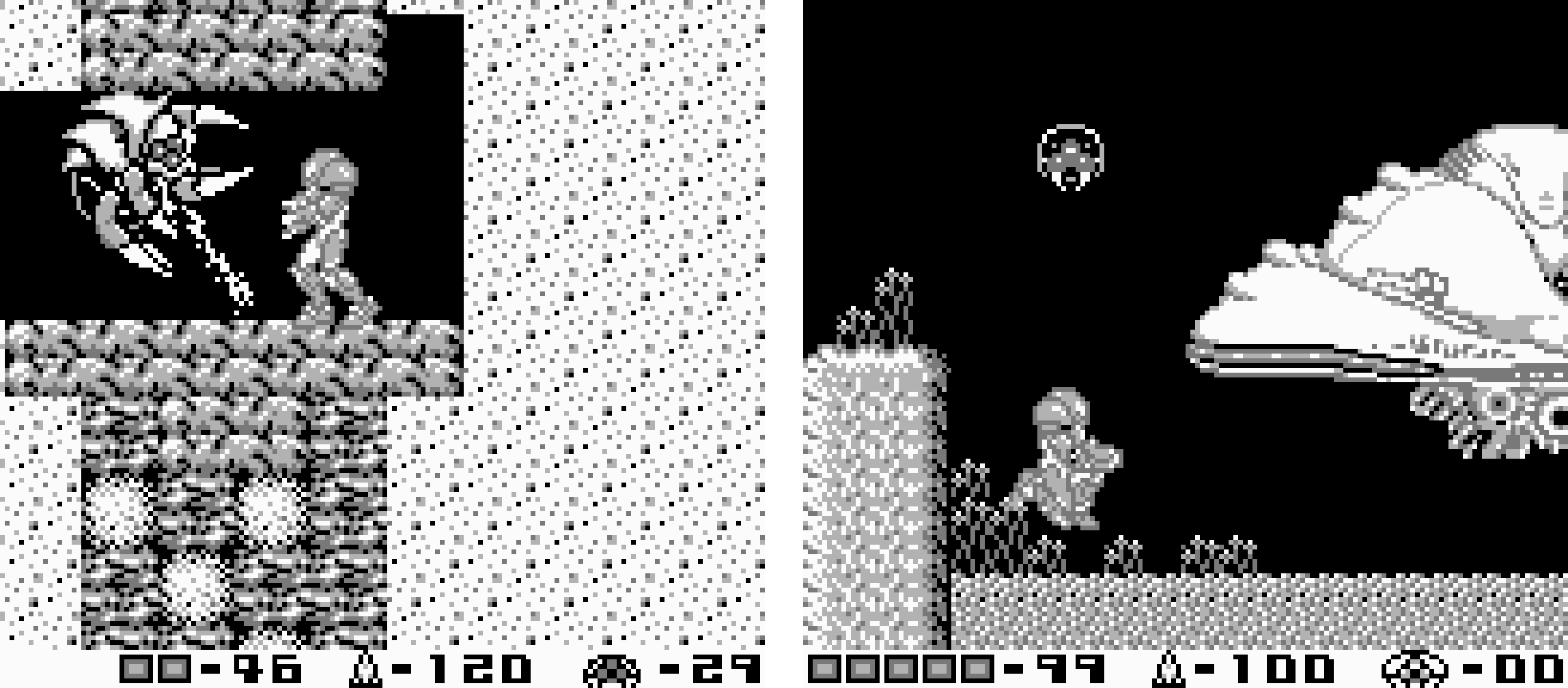
I'd say it's shocking that such a bold sequel was made on the original DMG Game Boy, but it kind of isn't if you're familiar with its library. Nintendo was using it as a place where they could make weird and creative sequels that could often take bigger risks than a bigger budget home console game. Link's Awakening, the Wario Land series, Donkey Kong '94. Metroid II absolutely deserves to be held up next to those.
The remakes are good games in their own right, sure, but they're not Metroid II. There's just something so magical about the original, a game which was conceived specifically to make the best possible use of the hardware. The black and white graphics, the cramped screen, the crunchy sound, the slow and methodical pace. These aren't flaws. They're what give the original game its identity. I'm so glad I finally played this.