
The Boys' final season is okay TV but weak satire

This post will contain spoilers for The Boys up through and including the finale.
Five seasons and seven years later, everyone's second favorite Seth Rogan-produced ultraviolent Prime Video superhero series based on a cult hit comic from the '00s has come to an end. Opinions seem to be divided between those who think the final season of The Boys was okay and those who think it was the worst ending since Game of Thrones. The latter camp is being more than a little hyperbolic, frequently spurred on by complaints about "filler" and powerscaling and a lack of giant climactic battles, but I at least partially understand where their disappointment comes from.
After years of the Boys trying and failing to defeat Homelander so that the story could keep going under more or less the same status quo, the end of season 4 promised a big shake-up. Homelander was now the de facto ruler of the United States, half of the good guys were captured, and Butcher seemed to be going full villain mode in his quest for revenge. Finally, the two rivals were going scorched earth, and everyone else would be caught in the crossfire. I found season 4 pretty weak, but the prospect of a cathartic final season where the writers could give events massive consequences and burn everything to the ground was enough to get me to come back one last time.
This... did not happen. Butcher gets the Boys back together in the first episode rather than going full villain, and we mostly return to the typical status quo of them going on missions together as part of a larger overarching plan to kill Homelander so we can have one last regular season of the show. Said season is generally decent, albeit with kind of stupid plotting where important characters keep flip-flopping on their motivations, the dialogue verges on grating self-parody at times, and way too much time is spent hyping up new characters from Soldier Boy's past who will return in the upcoming prequel series Vought Rising. The Boys also spend a lot of time ruminating over a supe-killing virus that could potentially lead to the genocide of all supes and whether or not this would be worth it to rid the world of Homelander, and then this moral dilemma is made moot when Homelander becomes immune to the virus at the end of episode 6. By the start of episode 7, the Boys have already pivoted to a whole different plan off-screen, which basically amounts to "give Kimiko Soldier Boy's powers and repeat the plan from season 3," and that's the actual thing that beats Homelander in the eighth and final episode.
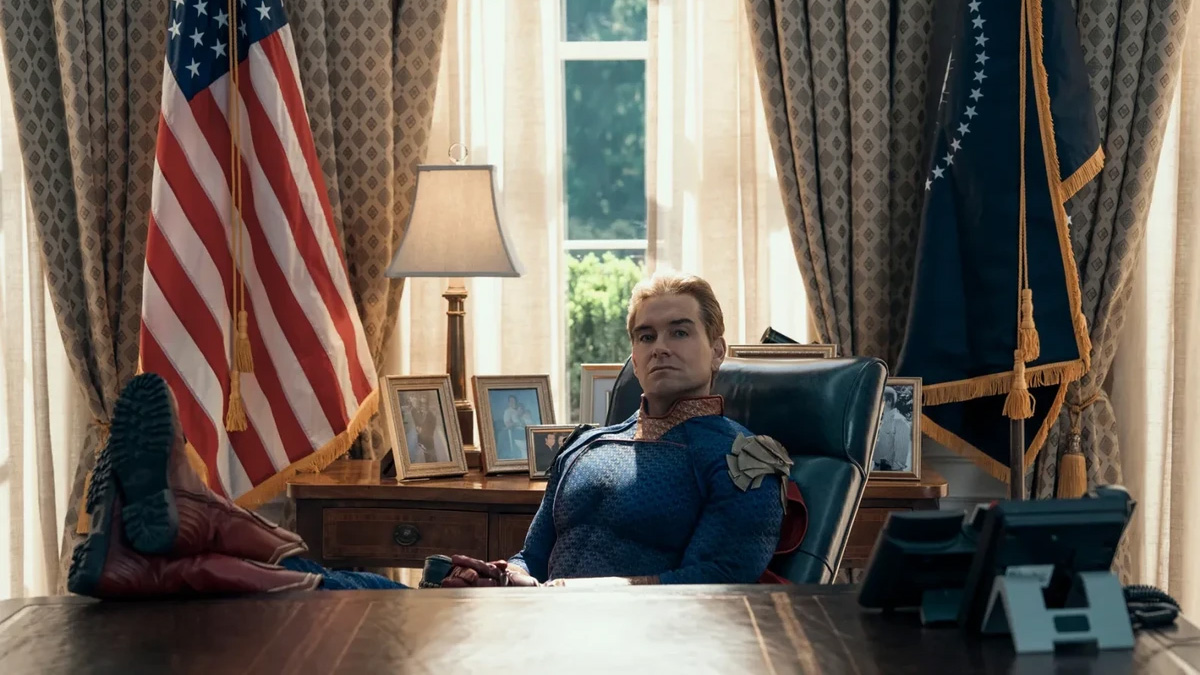
Regardless of the bumpy road it took to get there, in the finale Homelander is stripped of his powers in one final showdown in the Oval Office and Butcher kills him with ease. I like the death scene for cutting through all of Homelander's bravado and showing him for the pathetic coward he really is when he's no longer able to laser anyone he doesn't like. Then they speedrun the Butcher villain arc in the last 15 minutes by having him threaten to unleash the virus in Vought Tower, and a reluctant Hughie kills him. I guess I'm glad they didn't completely chicken out of this aspect of the story, but it still feels very rushed. Either way, the finale is fine overall. It hits the beats it needed to. Could've been better, could've been worse. This show was never going to end with a giant Avengers: Endgame superhero battle, or whatever people expected. It was always going to have some grating dialogue and dumb jokes along the way, because it's The Boys.
I'm more interested in getting into the political satire here, and the ways in which I think that aspect of the season falls short.
Homelander's America
It can be hard to remember at this point, but beneath all the middle school humor and "whooooaaaa they actually did the thing where Ant Man goes up Thanos's butthole and turns big to explode him, haha that's so craaazyyyy duuuuude" type moments, The Boys was capable of pretty smart satire in its early years.
Vought International was a company that would push surface-level progressive values when it was profitable, but deep down they were more concerned with supporting the U.S. military industrial complex, lobbying for legislation that would allow their supes to take part in military operations overseas. Vought also had whitewashed Nazi origins in sort of a nod to both Operation Paperclip and Alan Moore's argument that the superhero genre has fascist undertones, and the guy who wears an American flag costume falling in love with a literal Nazi trying to start a global race war was, y'know. Not subtle! But then you had more grounded bits like the famous montage showing a guy getting radicalized into committing a racist hate crime by an onslaught of cable news fearmongering and misinformation. Conservative viewers took the stuff about Vought's rainbow capitalism or A-Train's phony rebrand to "reflect his African roots" as evidence that the show was "making fun of both sides," but these people not getting it was a small price to pay for a more layered corporate satire.
But by season 4 the show had decided it would be funnier to just lean all the way into Homelander and Vought evoking Trump and Fox News on a surface level, and the show went downhill fast. Much ink has been spilled over how hard it is to write political satire these days when the conservative movement has become so outlandish, but just repeating the shit they say but with superheroes and going "haha, don't these people sound crazy?" doesn't make for captivating television. Get it, Firecracker's real name has the same initials as Marjorie Taylor Greene! A QAnon Shaman lookalike shows up at a Homelander rally! Homelander's coup literally take place on January 6th! Get it? So much of it is just references like this to specific people and events, rather than commentary on the system at large.
While season 5 is a step up from season 4, it continues this Homelander-as-Trump dynamic. And yes, there have been funny and/or eerie coincidences, like Trump posting an AI image portraying him as a Christlike figure right around when Homelander hallucinated being visited by an angel and told he was the new God. But there's also a lot the show gets wrong. Given it was written before Trump's reelection in 2024, it's kind of fascinating to me as a cultural relic of what liberal writers in Hollywood were afraid of with Trump 2, versus how things have actually played out in real life.
Mostly, there are a lot of jokes about famous left wing celebrities like Chappell Roan or Bill Hader being arrested and/or executed for posting anti-Homelander memes. This is really the main threat depicted here: getting sent to the gulag for wrongthink. There's even a sequence in the penultimate episode where they're focus testing a PSA announcing Homelander's new "godhood" and using psychics to see if the audience truly believes Homelander is God. When they have doubts, they're nearly killed for it. (Annie and M.M. save most of them.) The obsession with how he's perceived does fit Homelander's character to a T, of course. And I like the subtle joke where it's mentioned that Tyler, the Creator was arrested, and then later we meet Annie's incel half-brother who buys into all of the propaganda, and the whole time he's wearing a Chromakopia hoodie. But all this focus on liberal celebrities being arrested for critical tweets about Homelander just reminds me of the type of liberal who's more concerned about Jimmy Kimmel and Stephen Colbert going off the air for their political comments than anything else going on.
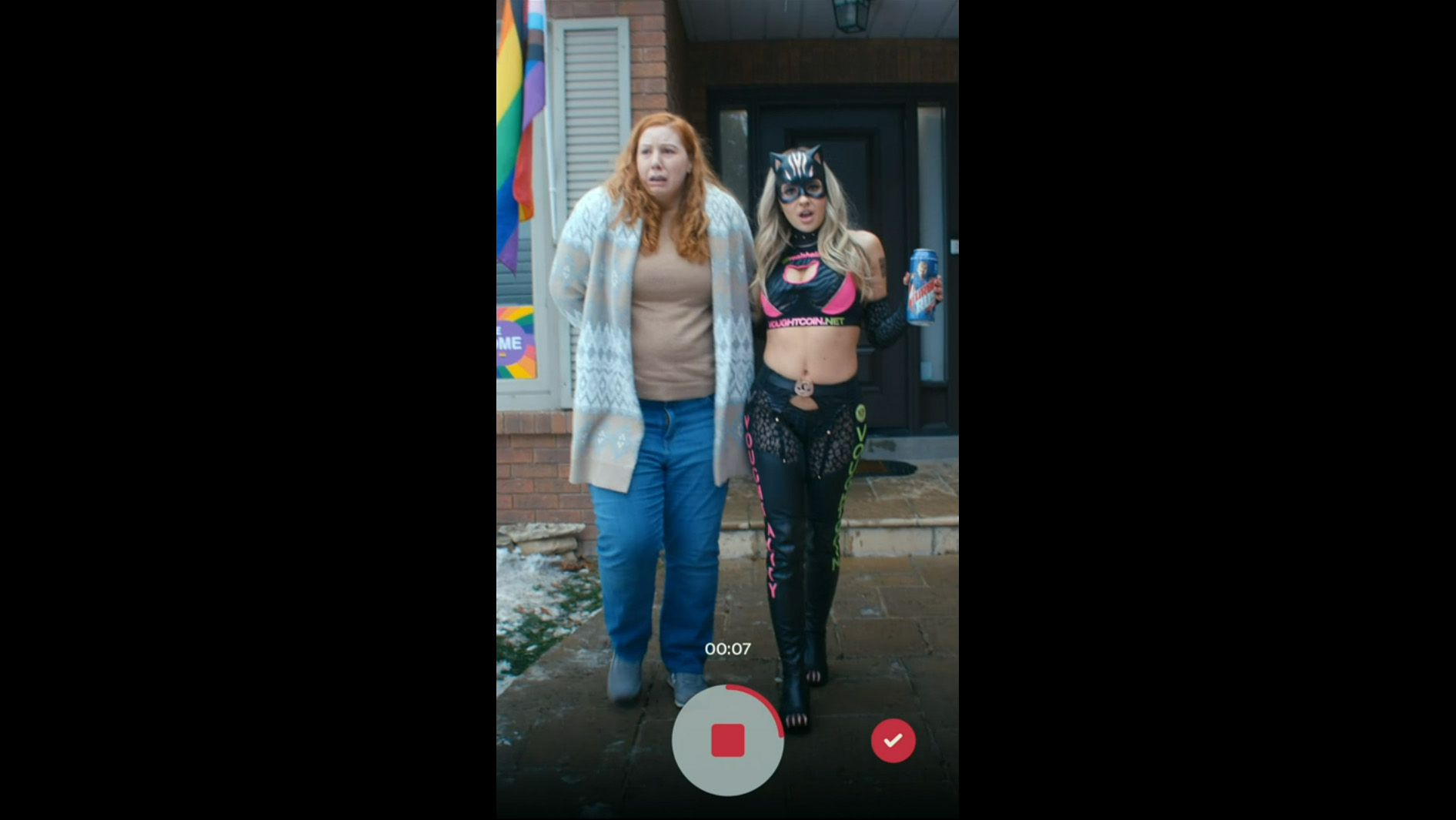
Homelander notably doesn't target the groups most affected by the actions of the Trump administration in real life. Unlike the early seasons, foreign policy and military action almost never come up, aside from a joke about Homelander hanging up on Zelenskyy and telling him to fend for himself. Despite being the living embodiment of American jingoism, Homelander isn't starting any wars in the Middle East, or anywhere else. There are no parallels to the countless deaths caused by the cuts to USAID. He's also not really targeting any domestic minority groups, either. He's not targeting immigrants or trans people, at least not beyond the expected throwaway jokes about Vought's Daily Wire-style fearmongering. We see supes acting as Homelander's personal enforcers and arresting a few suspected dissenters, but of course the main person we see getting detained is a white suburban mom. (She does at least have a pride flag on her house, I guess?)
On the flipside, while we don't see the same kind of evils Trump is committing in real life, we also don't see the same kind of resistance among the public, either. Or, really, many reactions of any kind from anyone outside of the core cast. This contributes to how small the season feels, which many have commented on. Lots of indoor dialogue scenes with two or three characters. The final battle with Homelander is contained entirely to the Oval Office, and we never see any of the widescale destruction he (and the season's promotional posters) threatened. But it's that lack of perspective on how real people are doing amidst all this that hurts the most, especially when The Boys started out as a series about regular people fighting back in a world of corporate superheroes who treat them as disposable extras.
Sure, Annie's said to have become the face of some kind of vague "Starlighters" resistance movement, but we never see any sort of organized resistance efforts outside of the work of the Boys and co. There's nothing like what we've seen in places like Minneapolis, or really any anti-Homelander protests at all, or even many throwaway scenes of random strangers reacting to the news. It's kind of just implied that the whole country is either pro-Homelander or too scared to speak up, with Annie feeling pretty hopeless about America's outlook for most of the season because of this. Yeah, it makes sense that people would be scared to stand up against the guy who could laser a crowd to death in an instant (not that he does anything of the sort this season), but that's another reason why it was a poor idea to use Homelander to so directly comment on Trump in these last couple seasons in the first place. People are not deathly afraid of Trump! People are not getting sent to concentration camps just for disliking him. People fuckin' hate the guy and vocalize this constantly.
The craziest example of the show's tunnel vision with regards to this stuff is in episode 7. Homelander literally crushes the skull of the President right there in the Oval Office, and then we never see any reaction to this from any character other than Ashley, who was Vice President and therefore gets a promotion. The President of the United States! Gone! And we don't even see news reports on it or people discussing the news or anything! It's crazy. It's so hard to feel like we're seeing this massive societal upheaval under Homelander's reign when we rarely actually hear from that society. This is the season of The Boys with the largest stakes and the smallest scale.
Actually, there are two major sequences where they get crowds of extras to react to Homelander's proclamations in the last two episodes, and they felt like a total waste to me. There's the aforementioned propaganda focus testing scene, where I was waiting for someone to go "um... what the fuck?" over Homelander's outlandish claim that he's God now. Like, imagine if Trump came out and was like "an angel told me I'm God." Sure, there'd be some crazies who buy it, but 99% of people wouldn't! I thought this could be a great character moment for Oh Father, caught between his seemingly genuine Christian faith and Homelander's demands that he sell people on this narrative. I wanted to see how he'd react to being called on this bullshit. But no, the focus testers all say they love it because they're all too afraid to criticize Homelander. The psychics put in the room to see if they're telling the truth can tell that some of them don't fully believe Homelander is God, but we don't explore their thoughts further. Later, in the finale, we get a whole auditorium full of people watching live as Homelander gives his unhinged speech from the Oval Office where he officially declares himself God on Easter Sunday, and at most we get a few uncomfortable side-eyes out of the crowd. I desperately wanted to hear from more normal people who don't buy this bullshit, but the show just wasn't interested in that.
There was, however, one bit of political writing I really liked in this season. Ironically, it was in episode 5, the one focused largely on side stories about supporting characters that annoying people online called "filler." In one of those stories, Firecracker is contacted by her reverend back in her hometown of Daytona Beach, Florida. Yes, my town. The only fictional character I can name from the place where I live is the sex offender superhero who's a parody of Marjorie Taylor Greene. Anyway, her reverend's Baptist church hasn't converted to Homelander's new "Democratic Church of America," and the churches in Daytona that haven't converted have been raided by a supe as an intimidation tactic. He asks Firecracker to try and get Homelander to back off, refusing to peddle the lie that Homelander is God. She's caught between her faith and how much she cares for this very sweet man she's known all her life, and her self-serving devotion to Homelander. Later, while recording her show, Firecracker is shocked when the teleprompter scrolls to a completely fabricated story about her reverend being a Starlighter pedophile who targeted her when she was a child. She struggles with this, but fights back the tears and reads out this lie through a fake smile. She's chosen to paint targets on innocent peoples' backs so she can keep her show and her spot on the Seven. She's chosen cruelty for her own personal gain, as all conservatives do. She's chosen Homelander. And her reward for this? He casually murders her when she makes a comment that bothers him.
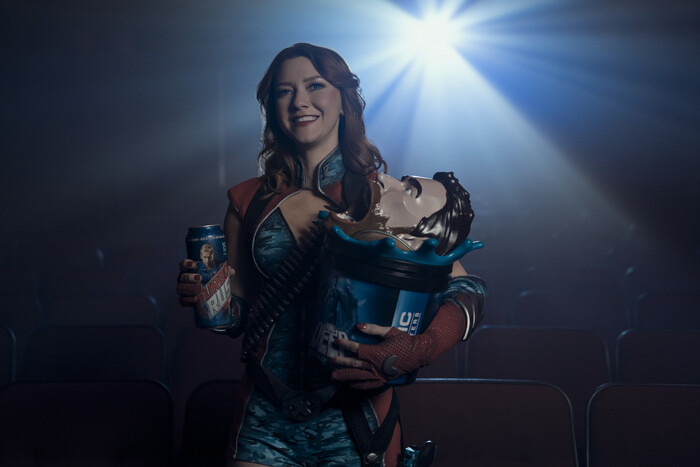
Then in the episode after this we see her one last time via a parody of the Nicole Kidman AMC ad from five years ago. So that's fun, I guess.
I don't blame the writers of The Boys for being unable to predict the future of Trump's second term, but sometimes it feels like they barely even took notes on the first term. But this will be an interesting time capsule of what fears were on the minds of Hollywood screenwriters in 2024, if nothing else. Kripke has stated that their goal was to "write a 1984 version of what creeping authoritarianism looks like in America," and they conceived a brand of authoritarianism that seems to primarily target comedy writers. Funny, that. This final season wasn't terrible overall, but I think it would've been much stronger if its political writing leaned more into intimate, human stories about how all this stuff affects individual people, like what they briefly did with Firecracker and her reverend, rather than spending so much time on a wild goose chase for a magic serum and writing checks it couldn't cash about going "scorched earth."
In the end, the bad man is gone, and everything is better now. The true monster, Vought, is still around, and Stan Edgar's even back in charge. In his final moments Butcher (correctly) argues that there's more supes still out there who could become the next Homelander any day now. But... eh, it's fine. The surviving protagonists live happily ever after. Don't worry about it. Or maybe do worry about it when Vought Rising and The Boys: Mexico drop. The ride never ends, but I'm probably stepping off here.
Comments