
I love Mina the Hollower's weird difficulty curve

This post will NOT contain any major spoilers for Mina the Hollower.
Four years after I backed it on Kickstarter, Mina the Hollower is finally here. Personally, the four Shovel Knight campaigns are some of my favorite games ever, so I was down for whatever Yacht Club had cooking next, and for me it absolutely did not disappoint. Mina is a lovingly crafted game that gets so much mileage out of its protagonist's ability to burrow into the ground, packed full of clever level gimmicks and secrets and treasure where it feels like every last pixel on the screen was carefully considered. And it's capped off with gorgeous 8-bit visuals and yet another killer soundtrack by Jake Kaufman, my favorite video game composer ever whose work is honestly enough to get me to check out a game on its own. For me, it was more than worth the wait.
For some other early adopters, though, Mina is proving to be a bit of an odd one, design-wise. I'm going to make the case for why it's not actually odd at all, but first we have to explain the expectations that are throwing some players off.
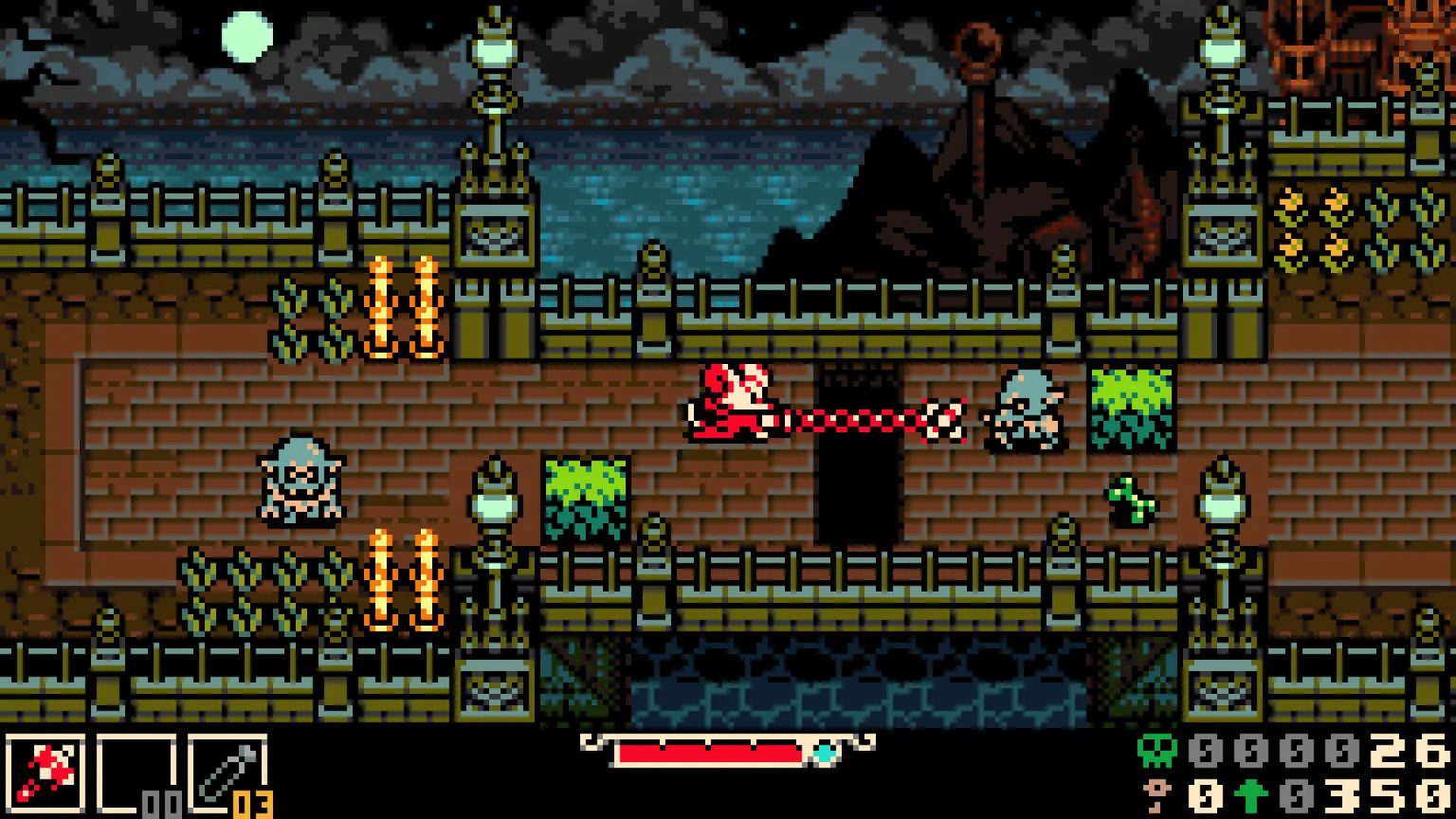
At a glance, Mina the Hollower is a tribute to the Game Boy Color Zelda games, but it's kind of more of a hardcore action platformer that just happens to be placed in a top-down Zelda-like world. The Castlevania influence cited since the Kickstarter runs much deeper than just the spooky gothic horror atmosphere. It's a game with demanding platforming challenges and enemy gauntlets that will work in tandem to kick your ass, especially early on as you're learning the ropes. Yes, it even has annoying flying enemies that cross the screen in a sinewave pattern and knock you into pits if you're not careful. Of course it does. (Falling into a pit just results in you losing a bit of health and being returned to safe ground, though, so it's not that grueling.) You've got to pay attention to your surroundings, know which targets to prioritize, make good use of the sub weapons you pick up from candelabras dotted around the world, and learn how to master the ideal positioning and spacing for your weapon of choice. You can choose the dual daggers if you want something that handles a bit more like Link's sword, but personally I stuck with the whip. The delayed rhythm of that wuh-PAH whipcrack felt incredibly satisfying for me to use as a Castlevania fan.
It's almost like Yacht Club used a more broadly palatable Zelda coat of paint to trick people into playing a classic Castlevania homage, like a pet owner hiding a pill in a piece of cheese. This is kind of hilarious to me. As programmer David D'Angelo put it in a podcast interview with Remap Radio:
I mean, we're obsessed with old school Castlevania, and most people are unwilling to play those games. [laughs] So it's like, how can we take that and make it interesting? The idea was to put it into this top-down space and really make that sort of positional feeling combat that you get in a Castlevania game, that isn't about dodge rolling and dashing with invulnerability—how can we do that kind of thing in the modern day and age without having stiff movement and fixed jumps?
I kid, but "I want to make a game kind of like X but people often assume they couldn't possibly enjoy a game like X, how do I present that so that more people will actually give it a chance and we can keep paying our bills?" is such a central tension in commercial indie game development. It's the shit that keeps me awake at night. (I already rambled about this sort of thing in the last section of my post inspired by last year's Game Awards.)
D'Angelo put this a different way in an interview with GameSpot, explaining Yacht Club's general design philosophy:
Yeah, one of the goals of the games we’re making in general is we want to make a game you love, but we also want to make games that make you love games as a concept. There’s a reason our games are retro-style games. It’s because the best thing that we hear when people play something like Shovel Knight is like, “Oh, I went into my dad’s garage and he had an NES and I dug it out and I started playing those games. Because before I didn’t see why you would play it, but now I see why you would go and try those games out.” And the goal is, we’re teaching you the language of how to maybe play those games, or what part of those games are appealing or fun or cool that you might stomach something that you wouldn’t normally do.
And so, Yacht Club made a game that took the combat rhythm of classic Castlevania and put it in a very different context, to help modern players understand the appeal.
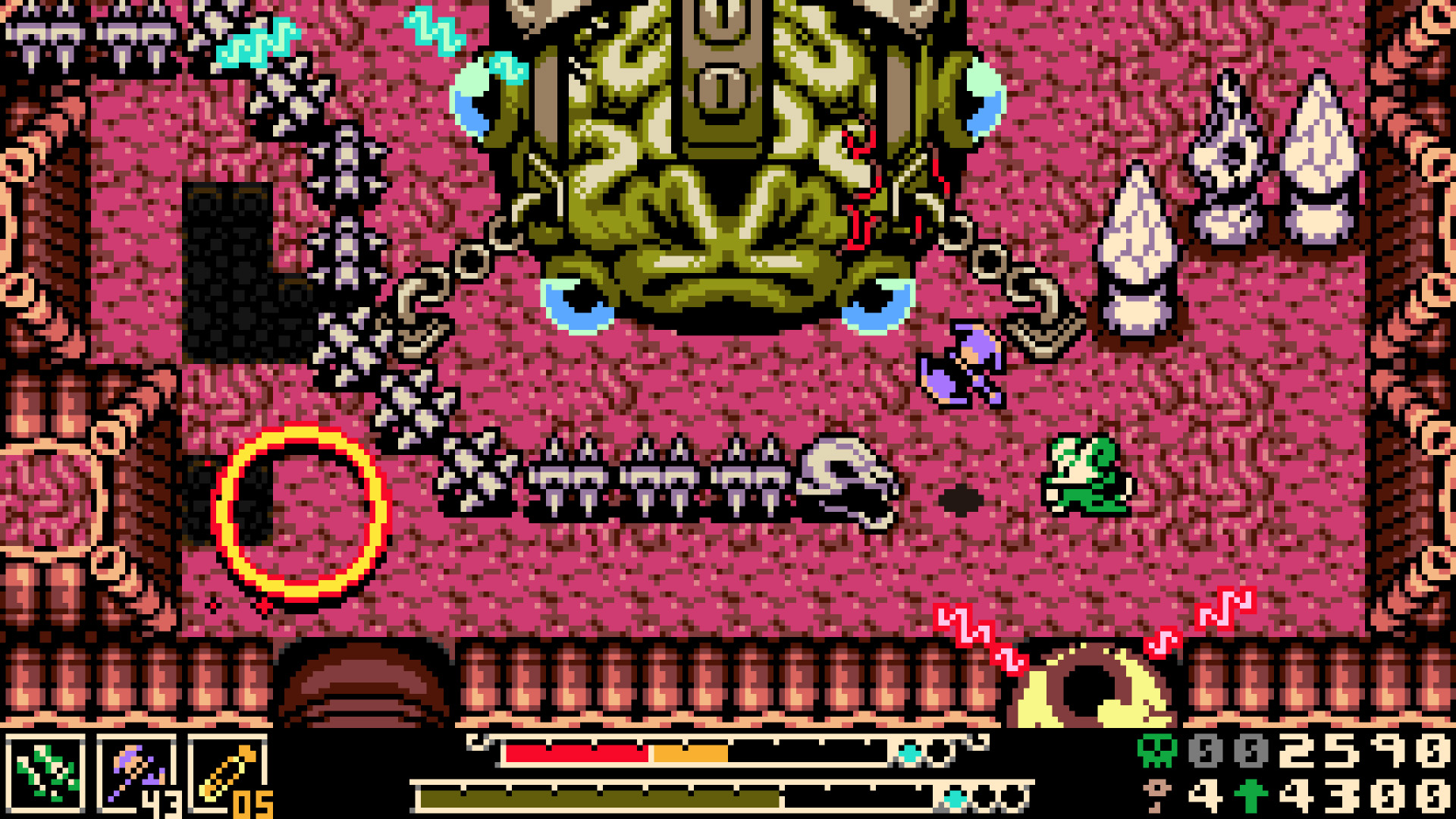
In adapting for the modern day, Mina also has a bit of Souls influence, which is further scaring off some of the players here for more of a pure Zelda experience. I sympathize as someone who has yet to click with a true Soulslike, but I wouldn't describe Mina as a full-blown one of those. It does have limited healing items that you have to use in the midst of combat rather than pausing to use them from a menu, and lots of paths that loop back on themselves to create shortcuts, and there's kind of a corpse run mechanic, albeit a much milder one than usual. But that's about it. It simply doesn't have that same love of trolling the player in borderline slapstick ways, or that combat rhythm, or storytelling driven by lore tidbits in item descriptions. It's barely got any more Souls influence than Shovel Knight before it, where you'd drop bags of gold you had to retrieve after you died. Some things I've seen people claim Mina took from Silksong or whatever are literally just things they both took from Castlevania.
That corpse run mechanic is probably the biggest sticking point, but even as someone who typically dislikes corpse runs, it really didn't bother me here. Upon death you drop a "spark," and then if you die again with no sparks then you lose all of your bones, which serve as both your currency and your experience. What this means is that the game effectively gives you extra lives and a warning to play more cautiously when you're on the verge of losing your pocket cash. You can try to go back and get your spark, or you can just go spend the money you have on hand before you lose it. Go buy an upgrade or dump it into the fund for the fast travel train or something. Or you can go somewhere easier to get enough bones to level up, at which point you'll instantly spend what you have and also get any missing sparks back. Being sparkless adds pressure, sure, but it's extremely forgiving. It completely lacks that death loop that drove me crazy in Silksong where I'd poke my head in somewhere I wasn't ready for, die, and then be forced to trudge back there again in a weakened state to retrieve my silk before going somewhere else.
It might feel discouraging in the early game, but if you didn't hit a threshold to level up before you lost your bones then what you lost is a completely trivial amount, in the grand scheme of things. You'll get more. By the late game I was easily racking up tens of thousands of bones just from fighting enemies normally, and if you're exploring every nook and cranny then the game is constantly throwing treasure chests with bonestone at you, a form of the currency which you can't lose no matter how many times you die. Throughout my adventure I only lost about 10,000 bones total out of something around 300,000 I collected overall. (Well, okay, I did lose the 45,000 I had burning a hole in my pocket when I got to the final boss. But I had that 45 grand on me because I had literally run out of things to buy, so that loss was completely meaningless.)
On the flip side, though, I've seen some fans with more of a taste for Soulslikes perplexed by Mina the Hollower's difficulty curve. Specifically, the way the heightened challenge of the early game dissipates somewhat as you level up and find more sparks and certain trinkets, particularly the ones that make your healing more powerful. For anyone expecting another Sekiro or Silksong that demands pure mechanical mastery with bosses that could take hours and hours of repeated attempts to finally vanquish, it simply isn't that. It doesn't exactly become a cakewalk, but it evens out to a roughly Shovel Knight level of difficulty—a game where you'll almost certainly die regularly, but very few individual challenges took me more than a handful of attempts. I beat the secret boss in maybe five or six tries.
But why would you make a game like this? Sure, you can use the dozens of granular difficulty modifiers to either smooth out that early difficulty spike or make the rest of the game harder, but why is the developer-intended default difficulty like this? Who would want a game that starts out so tough and then becomes easier via upgrades, rather than having a more traditional steadily climbing difficulty curve? Did they just overdesign the game and expect the player to balance it themselves with all modifiers?
I'll humor the thought that it might've been better to start the player off with two sparks rather than just one, so that the pressure isn't immediately raised when you die in the early game. As soon as you get a second spark, it's night and day. But I also think that knowing how hard the game is at its baseline made every upgrade and shortcut feel like a lifesaver in the early game and really pushed me to explore and find them. I enjoyed that experience, and it wouldn't have felt the same if I had two or more sparks the whole time. I might compare it to the experience of going from adventuring solo to recruiting your first party member in a JRPG, where suddenly you feel way more powerful because you now have a companion who can revive the protagonist in battle rather than getting an instant game over. This is something fans of newer games complain about when returning to games like EarthBound, but I'll always go to bat for the "clunky" early game with only Ness just because of how satisfying it is to finally recruit Paula.
But there's another comparison I'd make for much of Mina's design ethos, which should hopefully help make sense of all this.
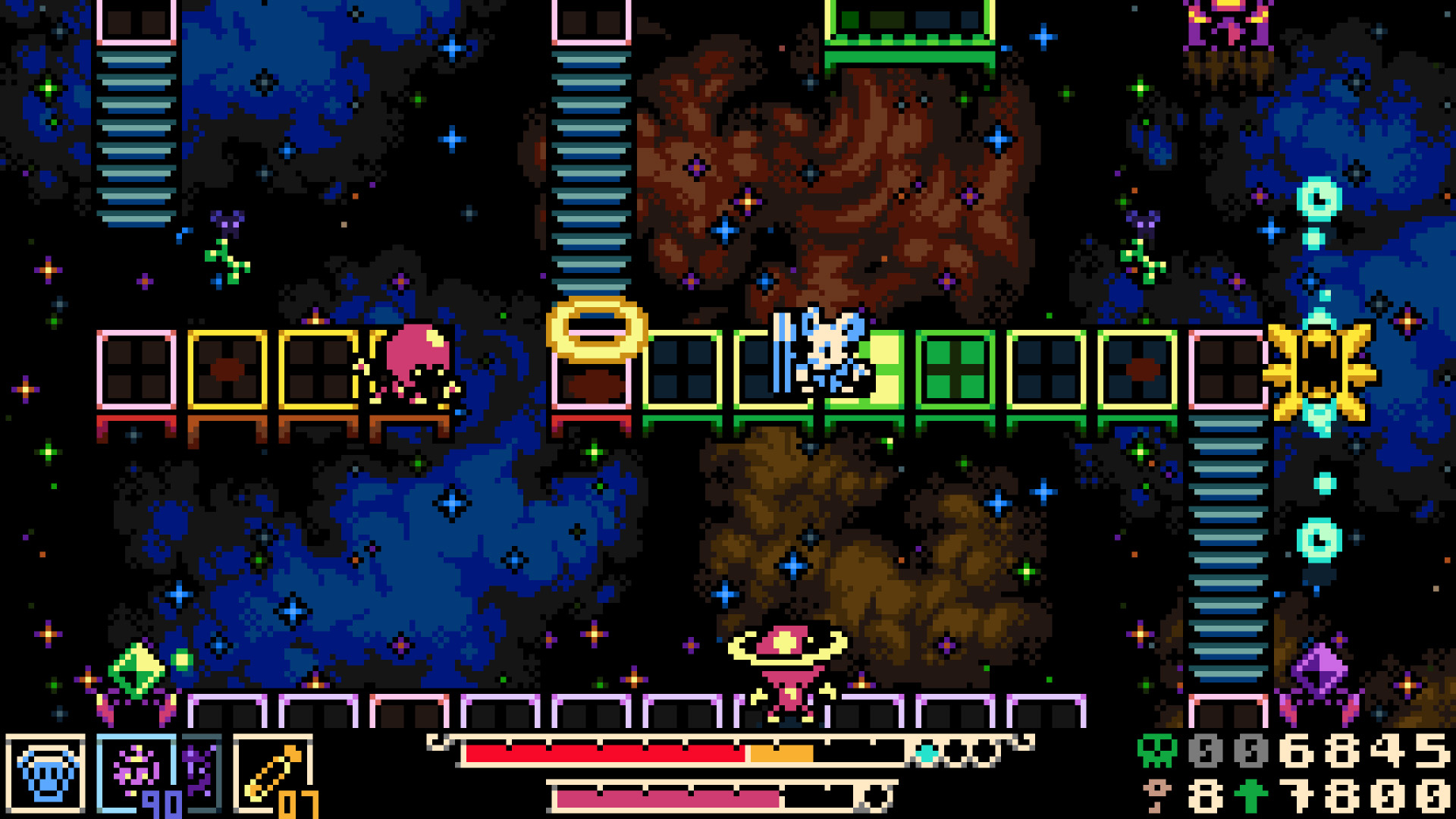
While it isn't one of the main inspirations typically cited by Yacht Club, I strongly believe that Mina has a ton of Mega Man DNA. Perhaps this was inevitable after they spent so many years making Shovel Knight and its expansions. And as a lifelong Mega Man fan, I adored Mina.
After completing an introductory area to teach you the ropes, Mina finds herself in the town of Ossex in the middle of the central region of the map, the "overworld" of sorts where you slowly unravel its tangled web of paths and shortcuts to make traversal easier. But fanning out from there are six more distinctly themed regions, four of which you can reach from the start while the other two take a bit of work to access. Your primary goal is to repair the generator towers in those six regions. The game gently hints at a recommended stage order via NPC dialogue and the in-game newspaper for those paying attention, but you're free to tackle them in whatever order you want. You know, kind of like how Mega Man lets you complete its eight main stages in any order.
While a few of those areas are framed as dungeons, they're really laid out much more like classic Mega Man levels, with a linear progression of densely packed obstacle course screens that escalate in challenge over time, capped off with a thematically appropriate boss. (Also the bayou area literally has yoku block lily pads you have to jump across.) There's occasionally a light bit of puzzle solving, and like in Shovel Knight each level is full of hidden side paths packed with treasure, but the focus within the main areas is on the action and platforming and stage gimmicks, weaving through the obstacles and finding an opening to hit the enemies. If you're looking at the game through a pure Zelda lens it might be disappointing that the "dungeons" are so linear and so light on puzzle elements, but if you're looking at them more like top-down Mega Man levels, they kick absolute ass.
The thing is, that Mega Man DNA also helps explain the difficulty curve. Mega Man games are often tough early on when you have nothing to your name but the default Mega Buster and you don't know which stage to tackle first. But once you manage to beat your first boss and get a new weapon, you finally feel like you've got a foothold to keep progressing. You acquire more tools to help blast through that initial set of stages and you feel more and more powerful, and things tend to snowball until finally you reach the tricky endgame castle that mixes threats from the previous stages together as one last test of your skills. This is even more true in the later Classic series games where there's a shop for you to buy E-Tanks and upgrades to make things easier over time, or especially the games in the Mega Man X lineage, where you can scour the levels for health upgrades, Sub-Tanks, and armor that gives you whole new abilities. Figuring out where those upgrades are to give you the upper hand against the game's challenges is half the game for a first time Mega Man X player. Mina is very much the same. All it's missing is a boss rush.
Some might say that all the trinkets and health upgrades and additional sparks and vials you get along the way "trivialize" the challenge the game presents you with up front, that you're not getting better at the game so much as you're being given items to cheese it. To that I would say: well, first of all, no, it's still a demanding game throughout, even if it gets less punishing. But I'd also say that finding those upgrades and seeing what a difference they make, or even finding ways to "break the game," is half the fun.
One of my core video game memories from my childhood is my time spent playing Mega Man 2, struggling to really make much progress against the eight Robot Master stages until I learned to start with Metal Man's stage so that I could blast through the game with his infamously overpowered weapon, the Metal Blade, which can be fired in eight directions and has so much ammo it might as well be unlimited. I love that in the boss rush you can obliterate Metal Man with his own weapon in one or two hits. In the same vein, it was super satisfying to use the Item-2 hoverboard you get after beating Air Man's stage to finally bypass the long yoku block platforming section over a bottomless pit in Heat Man's stage, which I'd previously struggled with.
Does this bypass many of the game's mechanics? Yes! But there are more ways to enjoy a video game than pure hand-eye coordination mastery. Sometimes the fun comes from the feeling that you've acquired special knowledge of where to get a tool that will help you and where to use it, and watching those once-imposing threats crumble before you. You could easily make the case that this is "bad design," but game design is an art, not a science, and how different people will respond to them is subjective. There's no one objectively correct way to balance a game that will please everyone.
I'll harken back to what I said in my recent in-depth review of Final Fantasy VII Rebirth. In one section I discussed how I ended up enjoying the "unbalanced" Enemy Skill system in the original game more than the more restricted, finely balanced equivalent in the remake, which requires you to clear some tough optional combat challenges before you can play around with the enemy skills at all. On paper, the latter would generally be considered "better" game design that forces you to engage with more of the combat mechanics before you're granted your most powerful spells, but I still kind of prefer the old, busted system that simply rewarded exploration and knowledge of the game world.
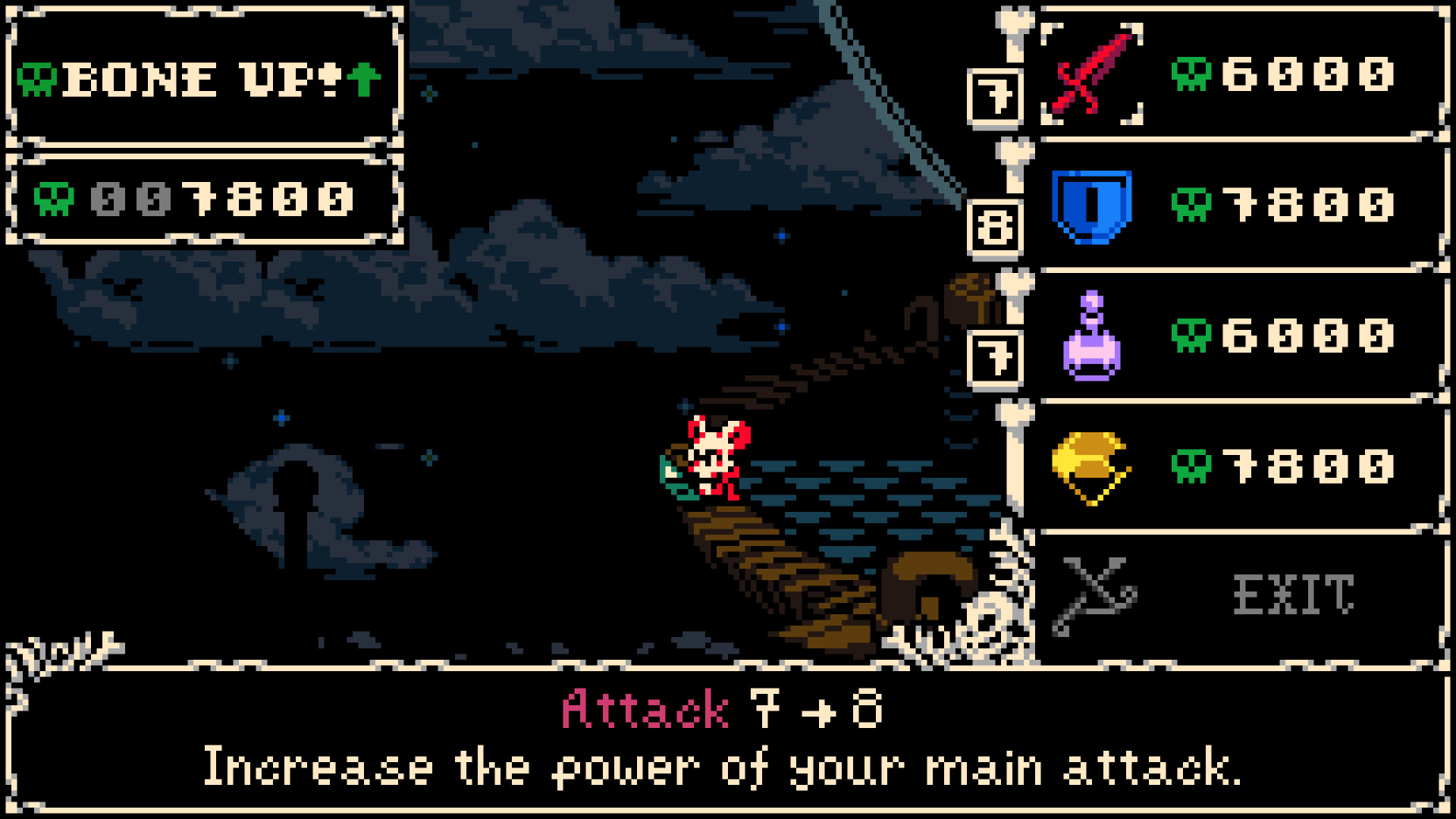
Mina's also just a bit of an action RPG. As is typically the case in RPGs, the leveling is there as a dynamic difficulty modulation system. You can grind a bit to make things easier for yourself, or you can plow ahead without grinding for more of a challenge. It's up to you. Likewise, if you're having trouble, you can explore for more gear and upgrades. In a classic RPG, if you're having trouble with the boss that uses lightning damage, you can try and brute force it, or you can go find the armor that grants lightning resistance.
An increasingly common sentiment these days seems to be that you should balance your challenges for the 100% player, so that the game still puts up a fight for completionists and you can't just break it by maxing out your gear. I understand where this line of thinking comes from, but I've just never vibed with it. In so many classic games that I love, especially early JRPGs and Metroidvanias, the expectation was that you wouldn't find everything on your own in your first playthrough, and that you probably wouldn't finish the game at max strength. If you got stuck needed more help, you could explore for more loot you'd missed, or ask your friends where to find the good shit, or check a strategy guide. (At one point I saw a mutual post a hint about where to find a useful upgrade in Ossex I'd completely missed, and I went and found it and it made a huge difference. It really harkened back to that classic experience of discussing games on the playground as a kid and exchanging information on where to find things not everyone had found in their own respective playthroughs.) Many games didn't even display completion percentages, and there was no way to know whether or not you'd actually found every secret. But now we live in the era of visible completion percentages and achievements and whatnot, and more players expect to play the game once, get 100% of the items, face a respectable challenge all the way through even at max power, and then be done and move on to something else.
But that's just not the type of game Mina is. Once again, like Mega Man, or the many other classic games that influenced it, it's a game that invites itself to be replayed. Sure, maybe you cheesed Mega Man 2 with the Metal Blade and flew over the last stretch of Heat Man's stage with Item-2. But once you've beaten it by any means necessary and familiarized yourself with the game, maybe you try to beat it without the overpowered options. Maybe you try out different weapons, a different boss order, even a Buster-only playthrough. Maybe after beating Super Metroid slowly and methodically with a kitted out Samus, you challenge yourself to do a speedrun and get a different ending. Maybe after beating A Link to the Past you replay it with a randomizer mod that shuffles the locations of items. Maybe you play Final Fantasy I with four White Mages.
Mina invites this same kind of revisiting. Maybe you play it again and don't rely on the most powerful trinkets this time. Maybe you never grind. Maybe you choose a different weapon at the start for a totally different combat experience. Maybe you try to do a speedrun and take advantage of all the clever shortcuts Yacht Club built into the map. Or maybe you play with its multiple tiers of new game+ options and its bevy of modifiers that function like built-in Game Genie codes, allowing for all kinds of wacky runs. It even includes its own randomizer mode, no mods required. Like David D'Angelo said in that interview, Yacht Club wants to teach new players the language of classic games so that they understand their appeal, and part of the lasting appeal of those games is that they're meant to be savored like this. They get that.
Stray thoughts on Mina's difficulty
- I focused largely on the Mega Man comparison, but I mean, early Zelda games (especially the two on NES) also gave players a similar early game experience of feeling underpowered and not knowing where to go and dying a bunch until you start to get some upgrades that will help make a dent in the adventure. Those just aren't the 2D Zelda games people typically think of first these days. But lord knows Yacht Club adores Zelda II. Bless their hearts.
- I respect Yacht Club's decision to not include a detailed map so much. I never missed having one, and I felt I gained more intimate knowledge of the map because I had to learn to navigate via landmarks and roadside signs.
- I've seen the reduced spike damage trinket referred to as "mandatory" but I beat the game without using it more than once or twice lol
- Being unable to heal through a platforming section with no enemies (the amount of healing vials do is based on how much you've built up that yellow section of the health bar by dealing damage to enemies) and dying and having to do it again sometimes is not a design flaw. The platforming is already abnormally generous with how many times you can fall in a pit or touch spikes before you actually die. The two autoscroller sections will literally skip you ahead to the next safe platform if you fall in a pit when the last safe platform you touched has gone off-screen. It's SO generous. It's not that hard! There are Mario games with more punishing platforming!
- Losing your subweapon and ammo on death is also fine. That's just how it is in Castlevania, where you're not expected to go into every encounter with full ammo, and doing so puts you at an advantage. Subweapon pickups and ammo are everywhere, learn to make do with what's available. (Also, as with so many other things in Mina, there are upgrades that will help, and you can get them very early if you just explore.)
- The side quest where you have to carry a snowball from Coltrane Peak to an NPC on the opposite side of Ossex without dropping it was hard, taking me like ten tries, and I almost gave up on it, but it's actually not as bad as it looks. Since enemies don't respawn until you enter your Underlab at a checkpoint you can clear the path ahead of time, and the worst obstacles are right near the start where you find the snowballs, so once you're past those you're pretty much home free. I appreciated the challenge in hindsight. (But also, you don't even need to do it for 100% if you don't want to. If you shell out the bones there's a secret shop that will sell you the trinkets you'd get from particularly hard and obscure side quests like this one! Once again, just explore and you'll find so many things to help you!)
I've discussed Mina the Hollower largely through its influences here, but that is, admittedly, a bit reductive. I think that understanding its design lineage can help you better understand what it's going for, since people judging it purely through the lens of Zelda, Castlevania, or Souls aren't getting the whole picture. But it takes all of these inspirations and synthesizes them into an open-ended top-down action platformer that embodies many of the things I love in classic video games, while also being its own genre-bending beast not quite like anything else I've played before. How many people are brave enough to make a top-down 2D platformer, a thing that developers have long struggled with due to how difficult it is to convey height from that perspective? Yacht Club was brave enough, and they knocked it out of the park thanks to the amount of thought and care they put into their work.
What a treat Mina the Hollower is. It's a challenging game, but one that invites players to finish it in their own way. I hope it's one fans return to for years to come. I know I certainly will. I just beat it with 100% completion, and I'm already itching to try out new game+. In the meantime, I'm going to continue jamming out to that soundtrack. Virt never misses, man.